

Triceps Time Under Tension: Slow Reps, Real Growth
By Jon Klipstein, U.S. Army Combat Veteran & Founder of Die Tryin Co., and Chet Nichols, Die Tryin Co. Trainer
Technique coached by Chet Nichols, Die Tryin Co. Trainer.
Science reviewed by Onur Oncer, BS Physiology (Phi Beta Kappa) and peer-reviewed published researcher.
Note: this video is from our UXO Supplements era — we've since rebranded to Die Tryin Co. Same team, same standards.
SLOW IT DOWN, FEEL IT MORE
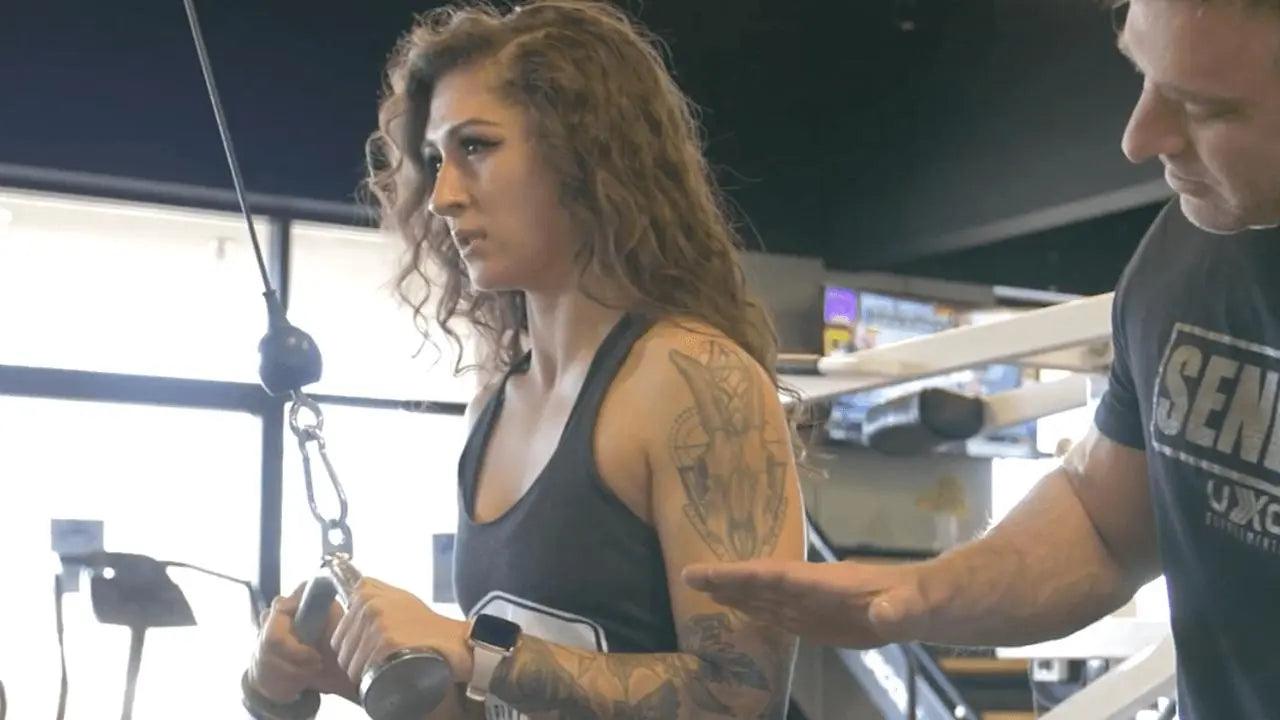
Most people rush triceps work — stack on weight, bang out fast reps, wonder why the arms never grow. This is the opposite approach. Drop the weight, slow the lowering, and keep the muscle under tension until it's screaming. As the coach in the video puts it, it's "a lot of pump with a lot of pain" — and for an isolation move like this, that's exactly the point.
Here's how the time-under-tension method works, the form that makes it count, and the honest version of what tempo does for growth.
WHAT TIME UNDER TENSION ACTUALLY DOES
Slowing your reps — especially the lowering (eccentric) phase — keeps the muscle loaded longer and makes a light weight feel brutal. That's real and it's useful. But the common claim that slow tempo builds muscle "more efficiently" than normal tempo oversells it. According to a 2015 meta-analysis in Sports Medicine, muscle growth is similar across rep durations from about half a second to 8 seconds — so a controlled tempo is one effective tool, not a magic trick. The one thing the research is clear on: going extremely slow (10+ seconds per rep) is actually worse for growth.
So why do it? Because for an isolation move like triceps pushdowns, a controlled eccentric is one of the easiest ways to take a set genuinely close to failure with perfect form and a massive pump — and that proximity to failure is what drives the adaptation. Slow isn't magic. Slow just makes hard reps unavoidable.
THE TECHNIQUE: ACCENTUATE THE ECCENTRIC
The tempo from the video is simple: about two seconds down, a hard contraction at the bottom, then a brief hold before you let it rise under control. No dropping the weight, no bouncing — every inch is earned. Twelve reps done this way takes about a minute, and it burns the whole way through.
Expect to fight it. In the coach's words, that lactic-acid burn "is just pain, it's temporary" — push through it, because the last few ugly reps are where the growth signal lives.
FORM CUES THAT MAKE IT WORK
Tempo only works if the triceps are actually doing the job. The cues from the session:
- Pin the elbows down and in. They shouldn't drift or flare — lock them so the movement happens only at the elbow.
- Keep the shoulders out of it. "A lot of people use the shoulders too much" to push the weight down — that steals tension from the triceps. Tilt the torso slightly, keep the arms working, and let the triceps do everything.
- Full extension, hard squeeze. Lock out straight at the bottom and feel the triceps pop before you let it back up slowly.
- Minimal movement, maximum isolation. If the whole body is moving, the weight's too heavy. Quiet everything but the working muscle.
WHY LIGHTER WEIGHT WINS HERE
This is the part most lifters get wrong: you use a lot less weight than you normally would. The goal isn't to move a heavy stack — it's to keep tension on the triceps for 14 to 20 controlled reps, where a single set can take almost two minutes. That's the "burn and pump from hell" the coach promises, and it's why ego-lifting has no place here. For the full menu of triceps movements to apply this to, see our guide to the best tricep exercises, pair it with bigger biceps work for a full arm day, and fit it into your week with our workout split guide.
FREQUENTLY ASKED QUESTIONS
What is time under tension (TUT)?
It's the total time a muscle is under load during a set — the sum of the lowering, lifting, and holding phases. Slowing your reps increases time under tension, which makes lighter weights far more challenging and is a useful tool for isolation work.
Does slow tempo build more muscle?
Not necessarily more — research shows growth is similar across a wide range of rep speeds (about 0.5 to 8 seconds per rep). The benefit of slowing down is that it forces controlled, hard reps close to failure. Just don't go extreme; tempos over 10 seconds per rep are actually less effective.
How slow should I lower the weight on triceps?
About two to three seconds on the lowering phase is plenty. Controlled and deliberate beats painfully slow — the point is to eliminate momentum and keep tension on the triceps, not to set a record for the slowest rep.
Why use lighter weight for time under tension?
Because the tension and the rep count do the work, not the load. A weight you'd normally rep for 8 might give you 14 to 20 brutal reps when you slow it down — and trying to go heavy ruins the form and recruits the shoulders.
How many reps should I do?
Aim for higher reps — roughly 12 to 20 per set, taken close to failure. With the slow tempo, a single set can take one to two minutes, so a few quality sets is all you need.
READY TO GEAR UP?
Earn the pump, then feed it. Drive blood flow with stim-free Red Dot, recover with Post Iso, or take the quiz to build a stack around your goals.
ALWAYS FORWARD.
Read more

DTC athlete Jenna Fiscus's lean Christmas coffee — a skinny peppermint white chocolate mocha with all the holiday flavor for a fraction of the calories.
DTC athlete Jenna Fiscus's back and abs workout — five rowing variations to build a strong back, plus a brutal plank-and-crunch core finisher. The full routine.
The essentials
Share details of your store's product selection, or share a story that speaks to your customers.